Values
How I work
I am an integrative therapist which means I draw on a range of psychotherapeutic models with a strong person-led approach. Central to my work is building a safe, supportive therapeutic relationship, where we work together to explore what you are carrying. This can include adjusting my approach to how therapy sessions unfold, as some people prefer a more ‘directive’ structure, whereas others may wish to set their own pace and path.
I utilise a ‘tool kit’ of practices as no two clients are the same and I value being able to offer different ways of understanding the circumstances that have brought you to therapy. My practice is grounded in embodied psychotherapy, with a humanistic and relational perspective. Other approaches I most commonly draw from include contemporary psychodynamic practice (including attachment theory), person-centred therapy, positive psychology, and mentalisation-based skills. I also utilise tools and skills I picked up from working in a multi-disciplinary team, which includes interventions from art therapy, music therapy, and dramatherapy.
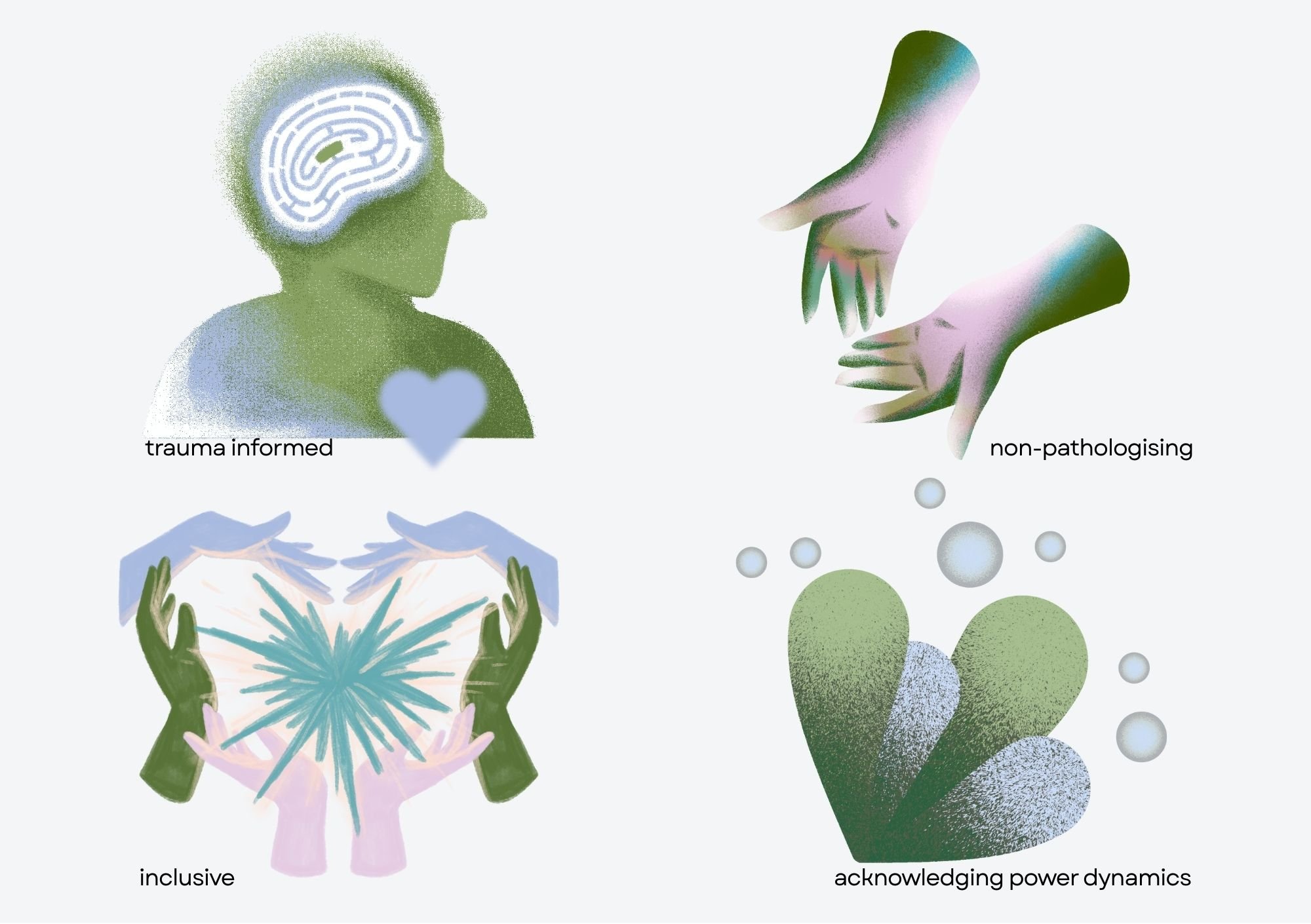
Trauma Informed
I utilise the key principles of a trauma informed approach: safety, trust, choice, collaboration, empowerment, and cultural consideration.
Non-pathologising
Our work is not about attributing labels or diagnoses, but exploring your lived experience, perspective, and approach in the communities you are part of.
Inclusive
I aim to offer a space where difference is acknowledged and valued. I maintain regular CPD around sexuality & gender, race & culture, and different perspectives.
Acknowledge power dynamics
I acknowledge that there are power dynamics at play in therapy, while also working with you to create a relaxed, informal, and collaborative space.
Who I work with
You don’t need to fit in a box, or have a formal diagnosis to access therapy with me; many people will come to see me for general wellbeing concerns. Other common reasons someone may wish to access therapy with me include:
Experiencing anxiety and rumination
Relational difficulties
Issues around personal development and fulfillment
Having general mental health and wellbeing concerns
Chronic pain/health problems and the impact this has on day to day life
Neurodiversity
Loss and bereavement
Confidence and self-esteem
Stress
Gender and sexuality
Coping with low mood and depression
Life changes
Anger